

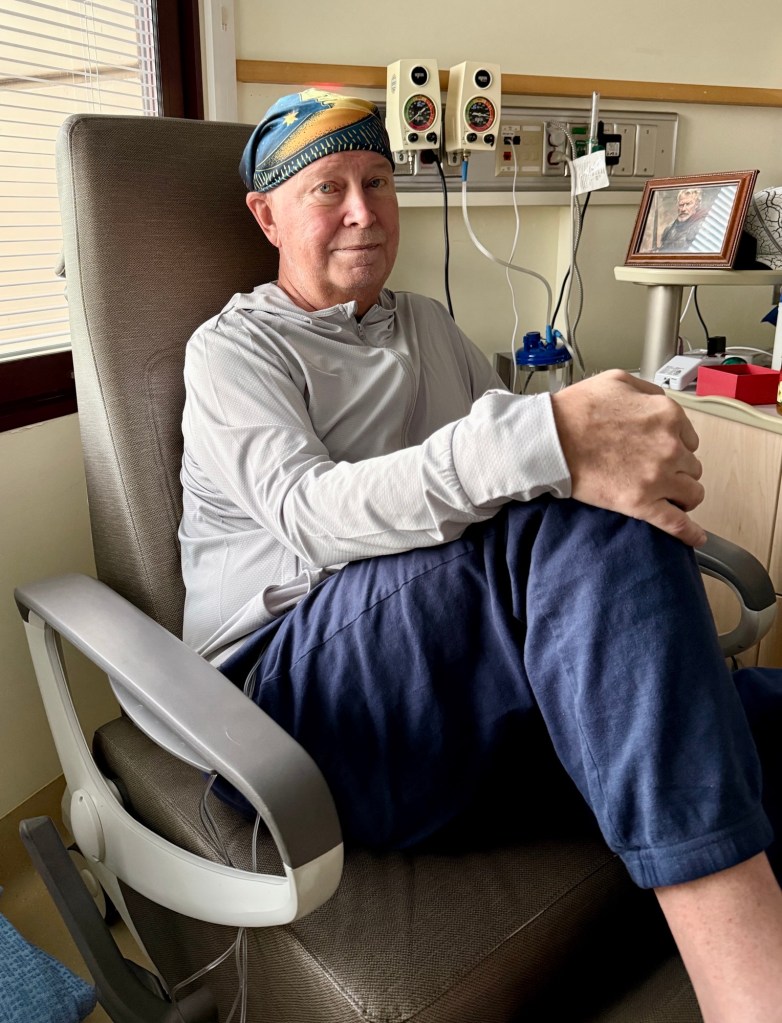
I belong to a Myelofibrosis support group on FB. It’s been enormously helpful to read other people’s stories, tips, questions and answers. It connects patients and caregivers in a club to which no one wants to belong.
Myelofibrosis is not unheard of but it’s classified as rare. According to *chtGPT, there are approx 60K new cases of leukemia (a related cancer-all types) per year in the US. In contrast, there are 2-3K new cases of MF. That’s why the FB page helps us understand this singularly unique affliction.
One question I often see is, “How do I prepare for the transplant?”
Acknowledging that every person’s experience is different, here’s what my husband did beforehand and what I packed:
BEFORE TRANSPLANT, MY HUSBAND:
• ate high-protein meals, fruits and vegetables (and sweet treats on occasion.) He didn’t go crazy with this, just tried to include some protein in every meal.
• walked our neighborhood to build stamina and lung strength.
• lifted weights at home—not for bulk but to strengthen muscles and bones.
THINGS WE PACKED & ACTUALLY USED:
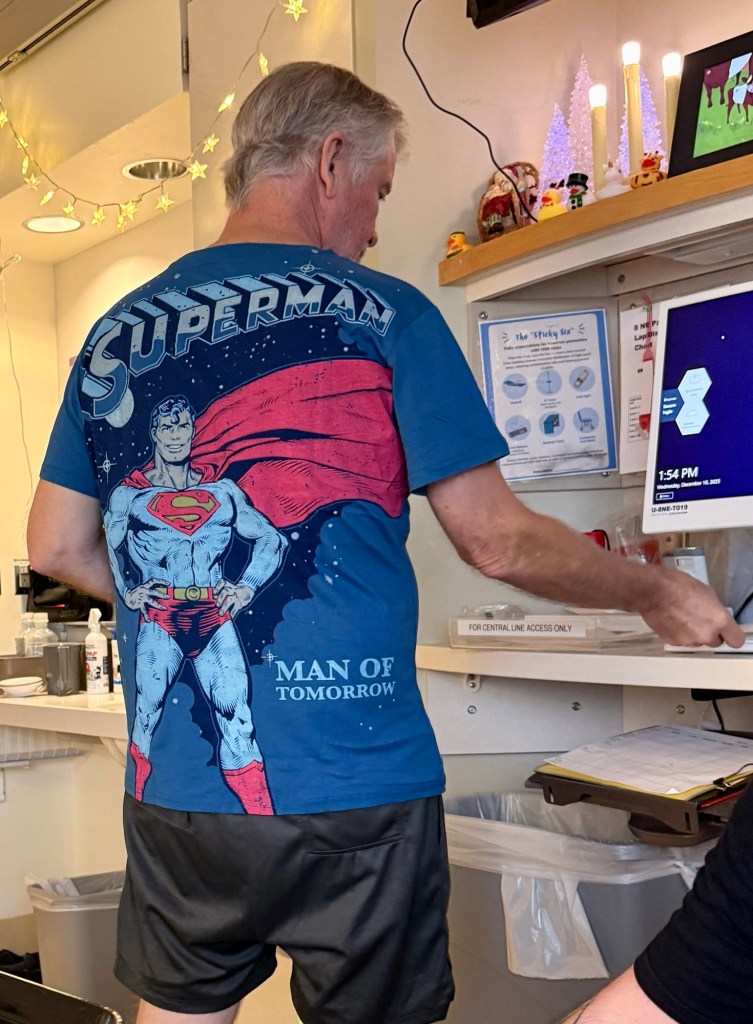
• an array of soft shirts that he could easily move to the side or pull up for the nurses to access his Hickman line (like a port). He especially liked shirts with a zipper at the top.
—note: his internal temperature made him feel hot sometimes and cold others so bring clothing to accommodate both
• 3 pair pull on lounge pants
• a couple pairs of shorts
• 7 pairs of socks, both regular and extra warm
• 7 pairs of underwear keeping in mind that he wound up wearing the stretchy hospital-provided disposable ones for a good portion of his stay, surprisingly comfortable.
• bag for dirty clothes which I washed every 3 days. I used a plastic/nylon grocery bag with handles that stood up on its own.
• laptop and long charging cord
• phone charger—long
• razor and shaving cream
• 3 soft beanie caps one of which was lined for when he felt cold
• standalone speaker for music
• good walking shoes for strolling the hallways, e.g. slippers, “slides,” Birkenstocks
• home pillow and multiple pillowcases
• favorite blanket—the hospital ones are okay but thin
• deodorant
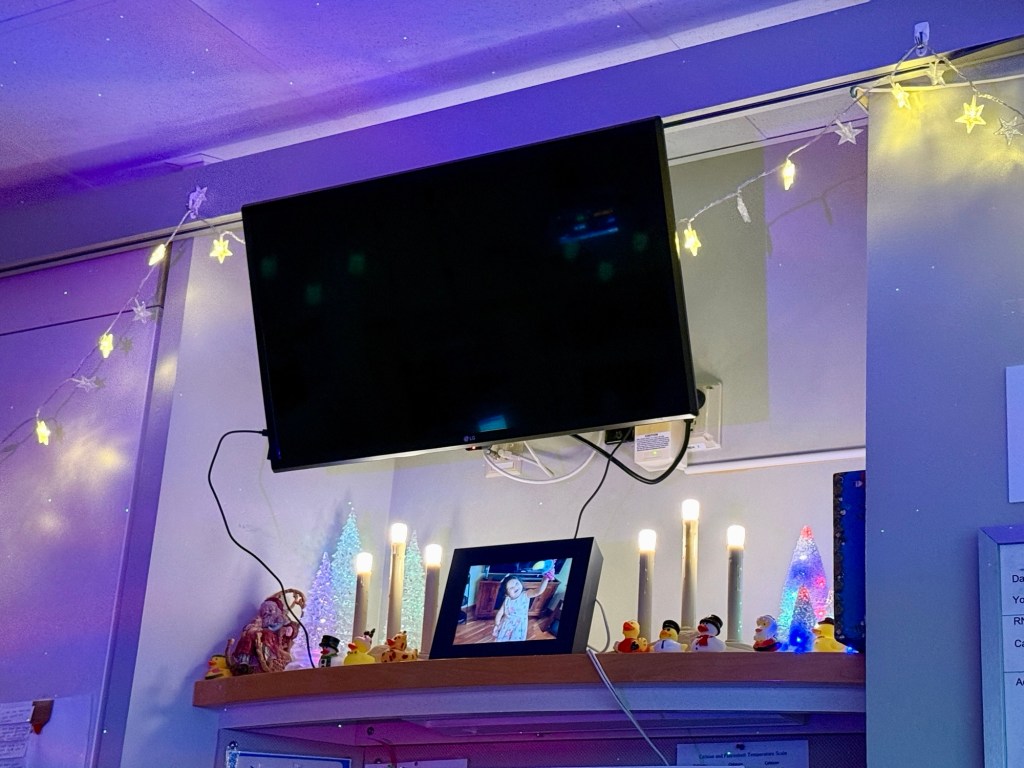
• digital frame loaded with family and travel photos
• mattress topper—essential
THINGS WE BROUGHT AND NEVER USED
• a bag full of books, brain puzzles and more to pass the time. He simply did not have it in him to do anything besides talk and exist
• toothpaste and toothbrush—the hospital provided them
THINGS WE DID TO LIFT HIS SPIRITS
—decorated his room: string of star-shaped lights with a twinkle setting, a few Christmas decorations on a shelf. When the holidays were over, I took that stuff down and plastered the walls with colorful printed cut flowers (he loves to garden)
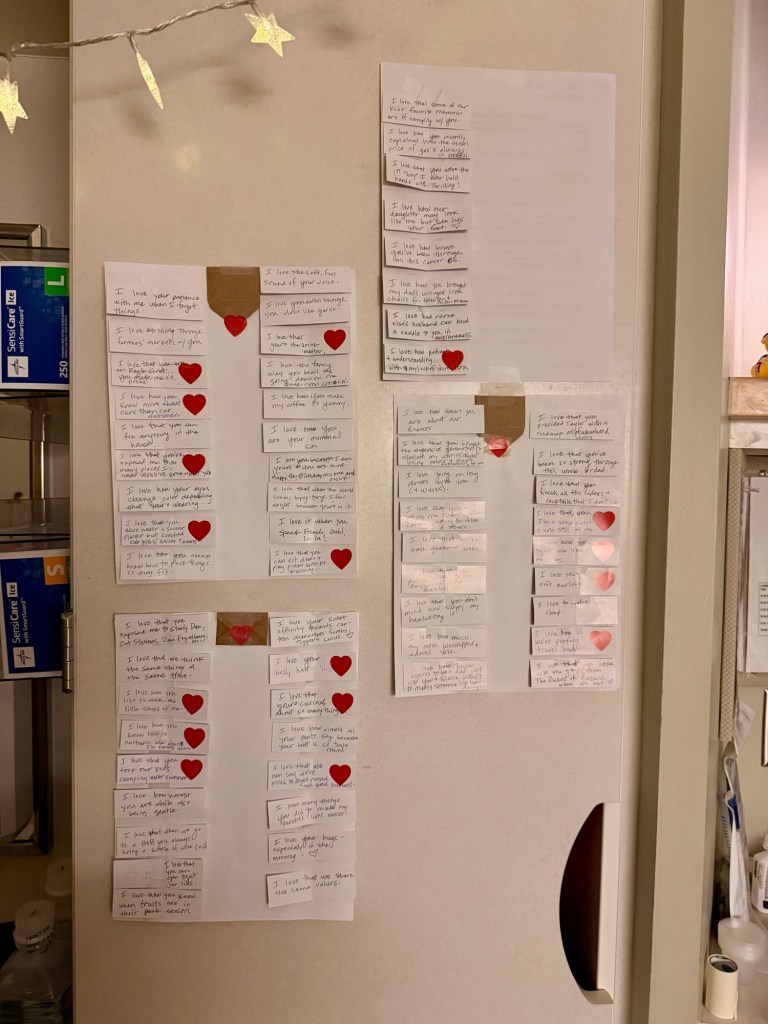
—taped little messages of support on his closet door, one or two each day
—walked the halls with him every day he had the stamina to do so
—brought food from home; anything he wanted. The hospital food was barely edible (plus he had a feeding tube in his nose for a few days before they switched to IV nutrition)
Probably the most important things were visits with his children, FaceTime calls with grandchildren and messages of love and support from all over: on FB, in the mail, texts and on this blog.
I hope this is helpful to others going on this brave journey. Focus on getting through one day at a time—that’s all you should ask of yourself. It does get better.
*disclaimer—CHTGPT is not always accurate but I have found it to be remarkably so
 Myelofibrosis--A Personal Journey
Leave a comment